
October 1, 2026
Every December, an invoice goes out to roughly 1,200 households in Tanglewood. It has nothing to do with property taxes. It's the Tanglewood Homes Association's annual maintenance fee, and for 2026 the number is $3,150 per lot, due January 1, delinquent after January 31, with a monthly late charge north of ten percent a year if it sits unpaid. Most residents write the check and move on. Fewer stop to ask what, specifically, that money is for.
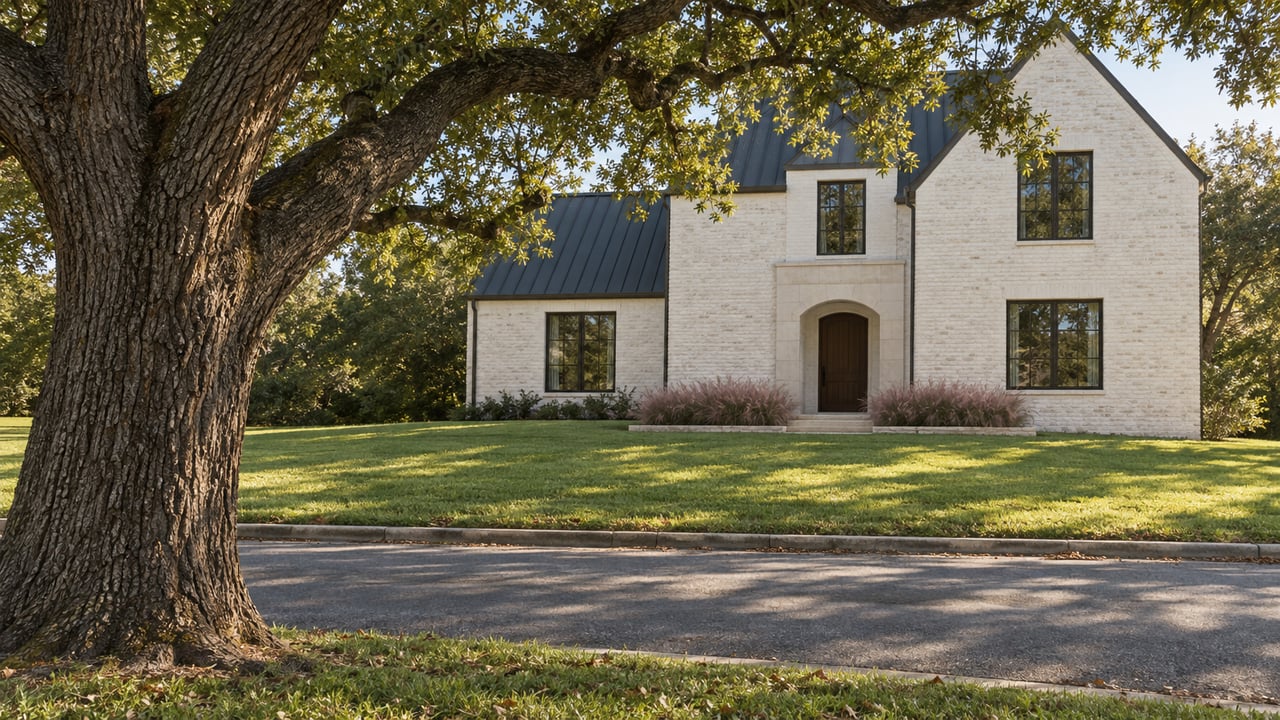
The answer is standing in plain sight every time you walk the boulevard. The mile-long median running down Tanglewood Boulevard, the live oaks that shade it, the benches spaced along the path, the dog park and tennis courts inside Tanglewood Park itself: none of it belongs to the City of Houston. It never has. It's private infrastructure, built and kept up by two separate organizations plus one resident-funded capital campaign, and understanding which entity owns which piece explains both the dues invoice and something that matters more: why this particular stretch of green space didn't sit in a public debris queue the way so much of Houston did after Hurricane Beryl in the summer of 2024.
The Tanglewood Homes Association was chartered in 1948, before most of the houses in the neighborhood were even built. Its job, according to its own governing documents, is day-to-day operation and maintenance of common areas, including entrances, medians, and cul-de-sacs, along with collection of maintenance fees, administration of a 24-hour neighborhood patrol, enforcement of deed restrictions, and private trash collection. A nonprofit filing lists the subdivision at 1,222 lots.
That charter is why the median down the center of the boulevard gets mowed, edged, and kept clear of the kind of weeds that show up on public rights-of-way elsewhere in the city. It's also why the neighborhood runs its own patrol rather than depending solely on HPD response times, and why the deed restrictions that keep a two-story teardown from crowding a lot line actually get enforced instead of just filed away. None of that is city service. All of it comes out of the same fee schedule that lands in mailboxes every December.
What the Homes Association's charter does not cover is the trees themselves.
The live oaks lining Tanglewood Boulevard were planted by the Tanglewood Garden Club, a volunteer civic organization that is entirely separate from the Homes Association. A related nonprofit, the Tanglewood Foundation, funded the benches, the bike path, and the walking trails along the boulevard, according to the Houston Business Journal's own reporting on the project, crediting the work to "the generosity of residents."
The Garden Club is not dormant history. It just elected its slate for the coming term, with Laura Winslow as president, Julie Krizmanich as vice president, and Donna Ellis as director of programs. Club activities run September through April, which means the group's working season for this year started this month. Any Tanglewood resident can join, and the yearbook that comes with membership lists every scheduled activity for the year.
So the boulevard has, functionally, three layers of stewardship stacked on top of each other. The Homes Association maintains the ground. The Garden Club planted and continues to steward what grows on it. And a third effort, separate from both, built the park.
| Who | What they maintain | How it's funded |
|---|---|---|
| Tanglewood Homes Association | Medians, entrances, cul-de-sacs, patrol, deed restrictions | Mandatory annual fee, $3,150/lot for 2026 |
| Tanglewood Garden Club | Trees, plantings along the boulevard | Volunteer dues and club fundraising |
| 2009-2012 resident campaign | Tanglewood Park itself: fencing, dog park, lighting, walkways | One-time community fundraising plus a city match |
Tanglewood Park sat neglected for roughly three decades before anyone organized to fix it. The only real improvement made in that thirty-year stretch was a children's play area. In late 2008, resident Linda Debrovner decided the park needed more than that, and she put together a committee, working alongside fellow resident Flo McGee, to raise money for it directly from the neighborhood.
What started as a plan to replace rusted perimeter fencing grew once the committee looked closer. The park needed tree cleanup, new furniture, new walkways, new tennis fencing, new lighting, more trees, and a dog park that didn't exist yet. Over the following three years, the campaign raised roughly $390,000 from within the Tanglewood community. The City of Houston added about $35,000 to complete the project.
That $390,000 didn't come from the Homes Association's annual dues. It was a separate ask, on top of what residents already paid every December, because the standing maintenance fee was never designed to fund a capital rebuild like that. It's the same pattern showing up a third time: when Tanglewood needs something built, the money for it tends to come from the neighborhood itself, organized outside of whichever entity already collects a check.
Hurricane Beryl made landfall near Matagorda on July 8, 2024, and the Texas A&M Forest Service later estimated that the storm affected roughly half of Houston's urbanized tree canopy. The scale of the citywide cleanup that followed was enormous. Houston's Solid Waste Management Department collected more than 1.7 million cubic yards of storm debris in the first pass alone, a figure that eventually grew past 4.7 million cubic yards across multiple collection phases.
That's the queue that a public right-of-way sits in after a storm like Beryl. It is not the queue that Tanglewood Boulevard's median sits in, because the median was never public right-of-way maintenance to begin with. It falls inside the Homes Association's own charter, funded by the same $3,150-per-lot fee that pays for mowing and patrol in an ordinary year. When storm damage hits common ground the association already maintains, the association's own crews and budget are the mechanism for dealing with it, not a spot in the city's cubic-yard count.
That's the practical difference a private median buys. It doesn't mean Tanglewood was untouched by Beryl. Half the region's tree canopy took damage, and a mile of century-old live oaks doesn't sit outside a citywide weather event. What it means is that fixing what broke on the boulevard didn't depend on the same debris removal timeline that the rest of Houston was working through.
Put the pieces next to each other and the shape of the arrangement gets clear. The Homes Association's $3,150 annual fee keeps the ground itself in working order and pays for the patrol and the deed restriction enforcement that most Houston subdivisions don't have. The Garden Club, running on volunteer time and its own September-through-April calendar, is why the trees on that ground are live oaks instead of whatever grew in on its own. And the park residents actually use for tennis, for the dog park, for an evening walk, exists because a committee led by two of their neighbors spent three years asking for donations on top of everything else already being paid.
None of that is city infrastructure. All three pieces are locally funded, locally run, and renewed every year by people who live on the streets they're maintaining.
If you're weighing what a Tanglewood address actually includes beyond the house itself, that $3,150 line item is worth five minutes of conversation. Lynn Tohme at Loulou Estates Group can walk you through what it buys and what it doesn't before you make an offer.
Stay up to date on the latest real estate trends.

My multicultural background allows me to cater to the varied needs of my local and international clients, ensuring that each transaction is a carefully crafted experience that respects and celebrates cultural diversity.
1800 St James Place Ste 302 Houston TX 77056