
July 2, 2026
If you are thinking about buying new construction or a tear-down in Tanglewood, you are stepping into one of Fort Worth’s most established redevelopment stories. This is the kind of decision that can feel exciting and complicated at the same time, especially when you are weighing lot value, design potential, city rules, and long-term resale. The good news is that with the right due diligence, you can make a more confident choice and avoid costly surprises. Let’s dive in.
Tanglewood is widely known as an established postwar neighborhood with roots in the 1950s and 1960s. Historic Fort Worth describes it as part of the Edwards Ranch development era, and the area between Bellaire Drive West and Hulen Street has seen meaningful redevelopment pressure over time.
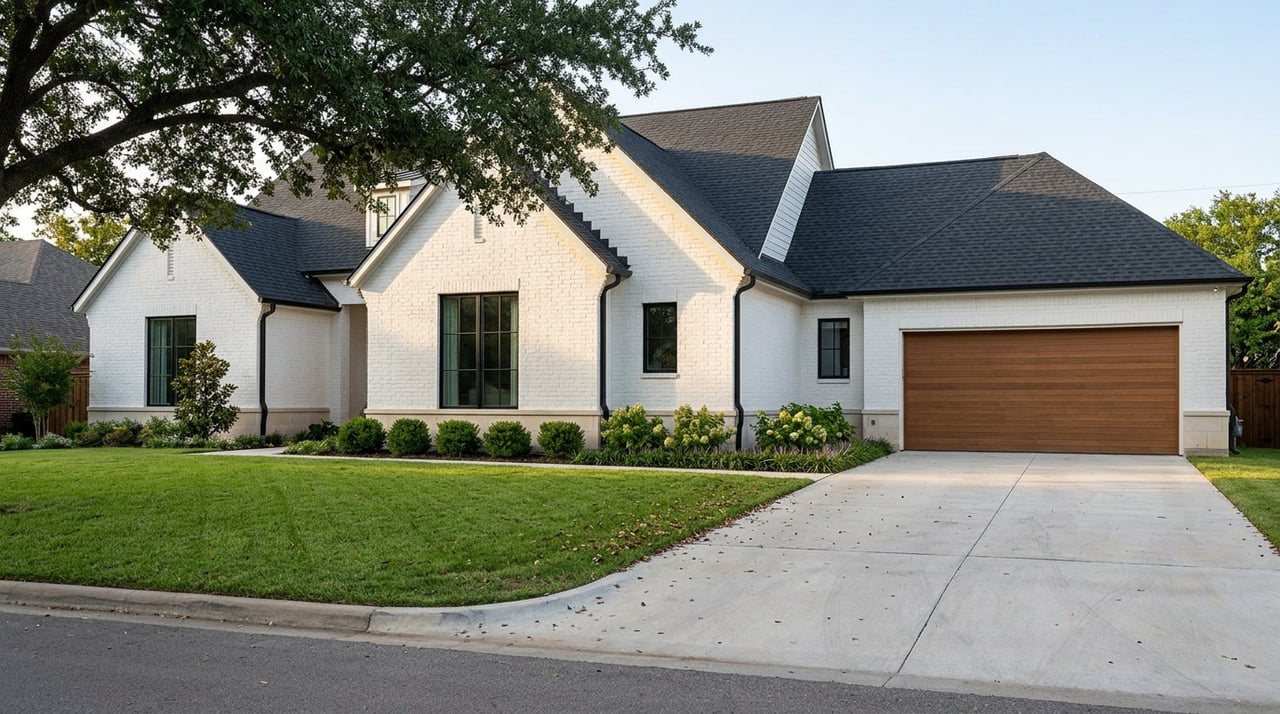
That matters because Tanglewood is not a blank-slate neighborhood. Much of the original housing stock consists of modest ranch homes and some midcentury modern houses, which creates a clear contrast when newer homes replace older ones. In practical terms, you are often buying into a neighborhood where original scale, mature trees, and larger replacement homes all exist side by side.
At the parcel level, Tanglewood can vary more than buyers expect. Sample Tarrant Appraisal District records show 1956 homes on roughly quarter-acre lots, while other properties have already been rebuilt with newer construction.
For example, public records show older homes like 3204 Spanish Oak Drive and 3113 Sweetbriar Lane dating to 1956, while 3217 Tanglewood Trail is listed as a 2019 rebuild. A 2022 Fort Worth permit for a new 4,798-square-foot home in Tanglewood Addition also confirms that infill construction is active within the neighborhood.
A tear-down is not always the best answer just because a house is older. In a neighborhood like Tanglewood, some homes may be structurally sound or architecturally significant enough that remodeling or enlarging them makes more sense than starting over.
That is why your first question should not be, “How fast can I build?” It should be, “What does this specific lot and house support best?” In some cases, preserving part of the original home can reduce permitting risk and protect value.
Before you close on a tear-down lot, confirm that the property is actually buildable under Fort Worth rules. The city states that a building permit for a new structure or addition may only be issued when the required property documentation is in place, including an official signed plat or legal deed that shows easements, property lines, and setbacks.
Fort Worth also states that no building permit may be issued on land that has not been legally divided through platting. For you, that means a teardown lot should be reviewed for platting, legal frontage, setbacks, and usable build envelope before you treat it as a straightforward new-build opportunity.
Historic status can change your timeline and design options quickly. Fort Worth requires a Certificate of Appropriateness for exterior alterations, demolition, or new construction if a property is in a historic district or is individually designated.
The city also notes that local historic district guidelines can regulate new construction and exterior design. Even if you assume a lot is ready for redevelopment, you should verify zoning and historic status at the start of your due diligence, not after you are under pressure to finalize plans.
In a mature neighborhood like Tanglewood, site work can be just as important as the house itself. Fort Worth requires a residential lot grading pattern for detached single-family and duplex projects, and grading review may involve drainage studies and stormwater sign-off.
The city also requires an urban forestry permit before land clearing or the removal of trees that are 6 inches or larger in diameter. If you are buying a tear-down, that means your project cost and timeline may be shaped by tree removal, drainage review, and grading compliance before vertical construction even begins.
Fort Worth’s residential building permit checklist gives a clear picture of what new construction typically requires. Depending on the project, the city may require an application, complete plans, a certified plat, a site plan, and an urban forestry permit.
Fort Worth also publishes the building codes it currently uses, including the 2021 International Building Code family, the 2015 Energy Conservation Code, the 2018 Swimming Pool and Spa Code, and the 2023 National Electrical Code with local amendments. For you, this means a builder should be able to explain not just the design, but also the city process for getting that design approved.
Builder selection should go beyond glossy photos and floor plans. One of the most useful public checks is whether a builder has verifiable permit history for ground-up work in Tanglewood or comparable Fort Worth neighborhoods.
Public permit records show examples of builders tied to new single-family work in Tanglewood, including MaxBen Homes, Riverside Homebuilders, and West River Homes. A permit record is not a quality score, but it is evidence that a builder has worked through the Fort Worth process on lots in this area.
Builder websites can still be helpful as a second screen. Research notes also point to firms such as 6th Ave Homes and Open Prairie as examples of companies that market services in Fort Worth areas including Tanglewood, but public records remain the stronger starting point for verifying local activity.
In Tanglewood, resale value is not just about square footage. Historic Fort Worth has raised concerns that oversized replacement homes can overwhelm original lots and reduce mature tree canopy, which suggests that neighborhood fit may influence buyer appeal over time.
That does not mean every new home must look the same. It means a house that feels appropriately scaled to the street and site may appeal to a broader future buyer pool than one that pushes every limit of the parcel.
Part of Tanglewood’s staying power comes from continuity. FWISD notes that Tanglewood Elementary opened in 1960 and has remained a long-standing community anchor, with recognition for academic excellence and community involvement.
For buyers, that helps explain why the neighborhood continues to attract interest across generations. Even as redevelopment continues, the area still carries a strong sense of place, and that identity can influence both demand and resale.
If you are considering new construction or a tear-down in Tanglewood, your process should stay grounded in facts rather than assumptions. The lot may look ideal at first glance, but buildability, setbacks, platting, trees, and drainage can all affect what is truly possible.
This is also where a concierge-minded advisor can add real value. When you are comparing a remodel, a lot purchase, and a full custom build, you need clear guidance, thoughtful evaluation, and a steady process from first tour to closing.
If you want a refined, data-informed approach to buying in changing neighborhoods, Lynn Tohme offers a personalized real estate experience designed to help you move with clarity and confidence.
Stay up to date on the latest real estate trends.

My multicultural background allows me to cater to the varied needs of my local and international clients, ensuring that each transaction is a carefully crafted experience that respects and celebrates cultural diversity.
1800 St James Place Ste 302 Houston TX 77056