
September 3, 2026
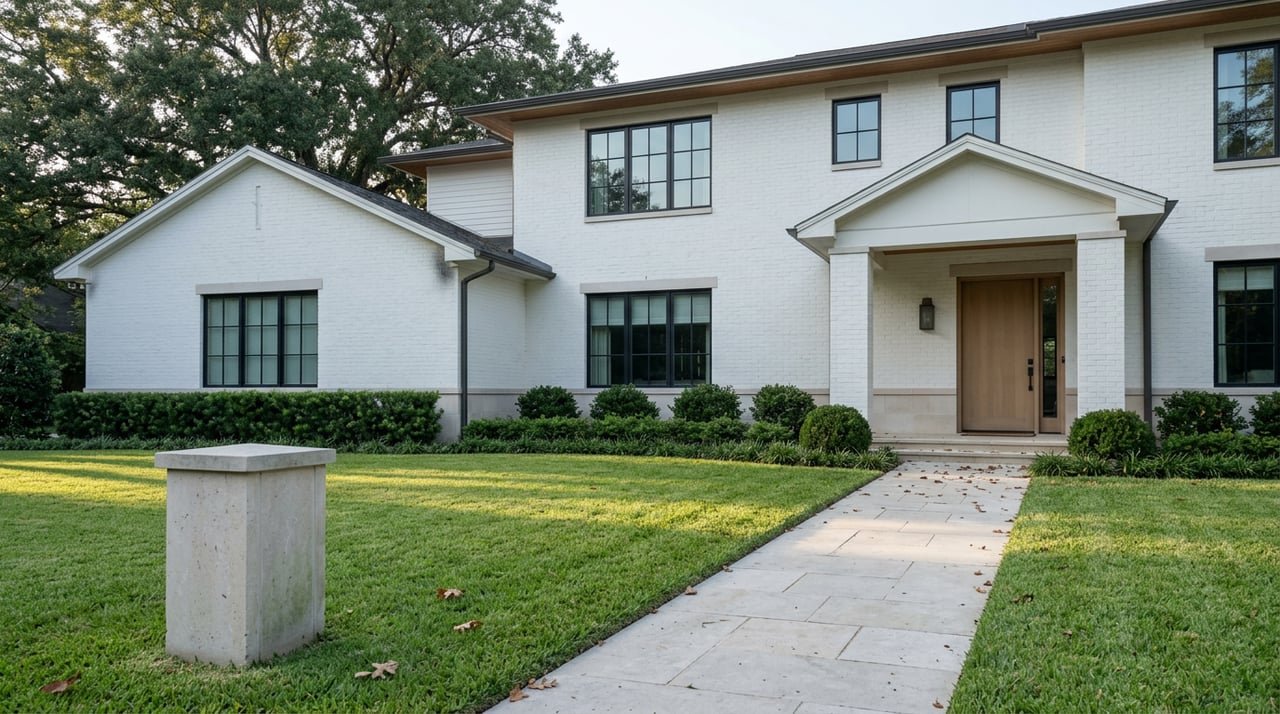
Walk the corner of Rice Boulevard and Bissonnet today and you will pass a concrete pillar that has stood there since 2022. Not 1922. Not even 1972. For most of Southampton's century of existence, that intersection had no pillar at all. If you have ever wondered why some corners in University Place carry these small stone markers and others do not, or why your trash cans disappear from view on collection day instead of lining the curb, the answer traces back to a 1923 development plan that is still doing exactly what it was built to do.
Southampton, the subdivision at the heart of University Place, was platted by developer E.H. Fleming starting in 1923 on land originally surveyed under an 1845 land grant to Obedience Smith. The neighborhood's marketing in the early 1920s made a specific promise to buyers, one that had nothing to do with architecture or schools. It promised that concrete alleys would run behind every home site, carrying water, gas, sewage, and deliveries so that residents would never have to look at a garbage can from their own front porch. That single infrastructure decision, laid out before a single house was built, is the reason the neighborhood looks and functions the way it does more than a hundred years later.
Most Houston subdivisions built after the 1940s put driveways on the street side and set trash bins at the curb because that is simply how postwar suburban platting worked. Southampton did the opposite by design, and did it before most of its houses existed. The 1920s sales materials spelled out the mechanics: alleys would carry the utility lines and the heavy traffic, freeing the street frontage for lawns, trees, and unbroken sidewalks. The same documents set minimum construction costs by street, with houses facing Rice Boulevard required to cost between $12,000 and $15,000 and those on Sunset Boulevard between $8,000 and $10,000, a pricing structure meant to keep the frontage consistent block by block.
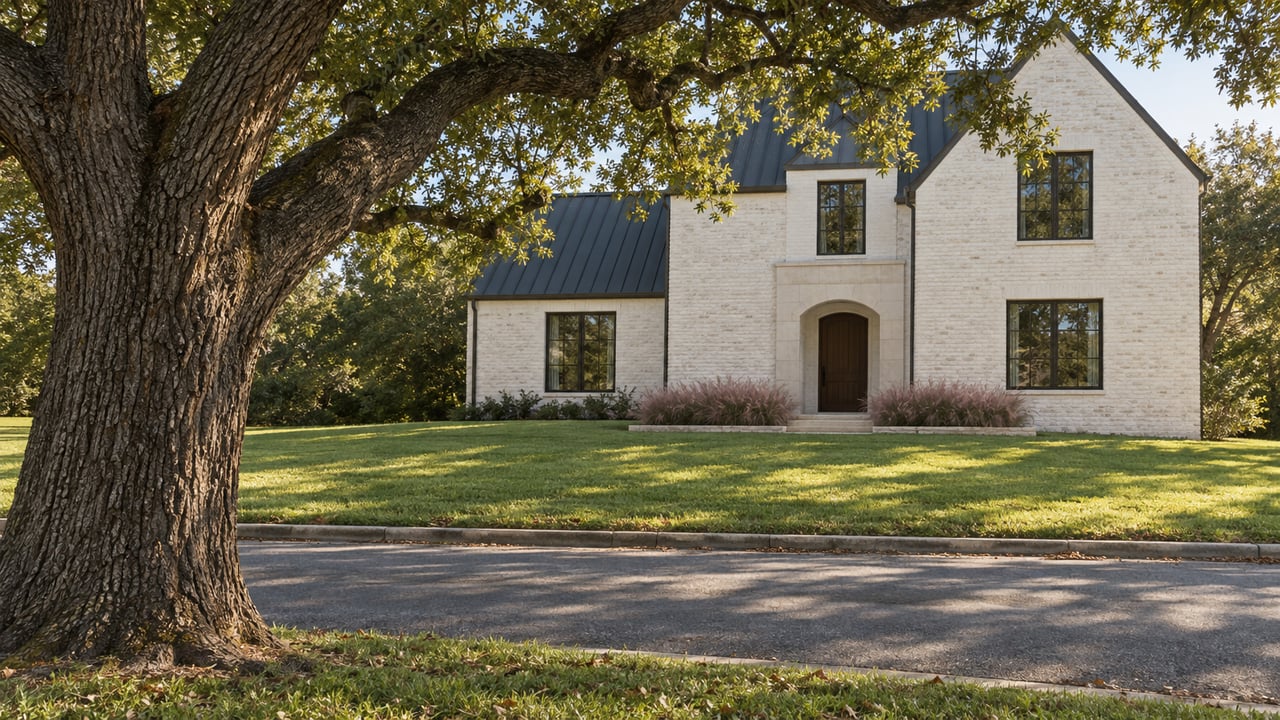
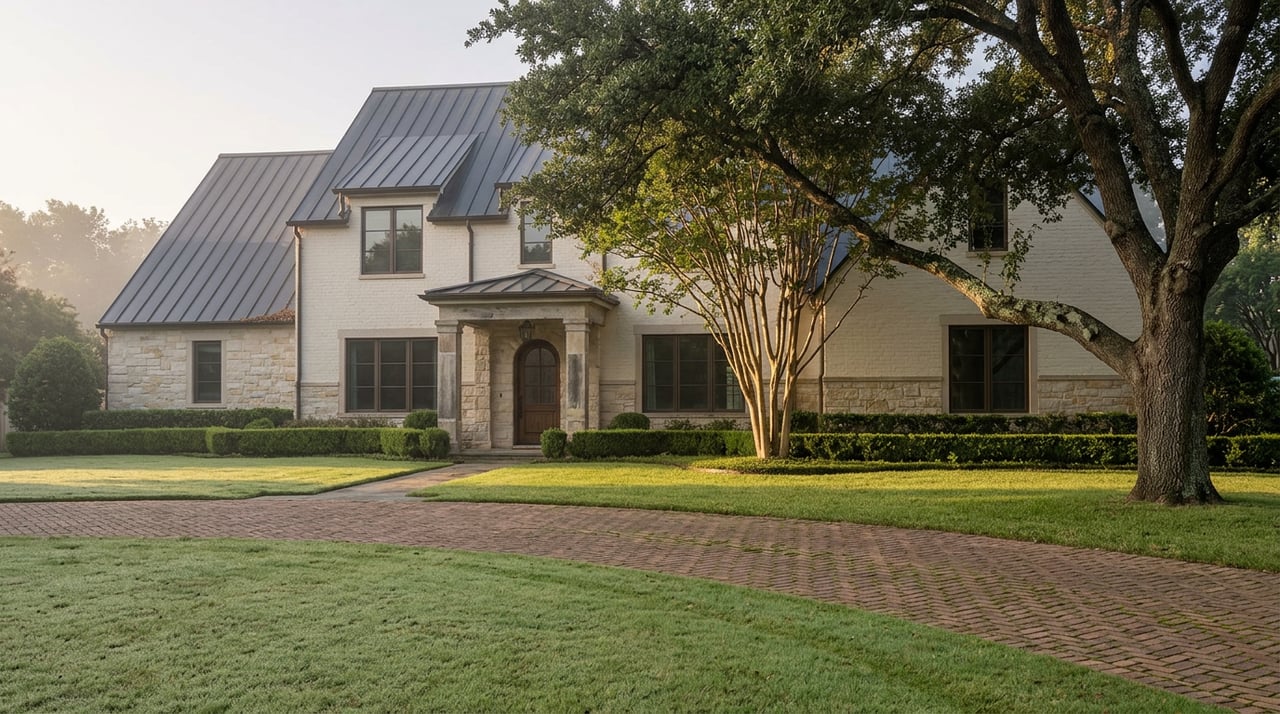
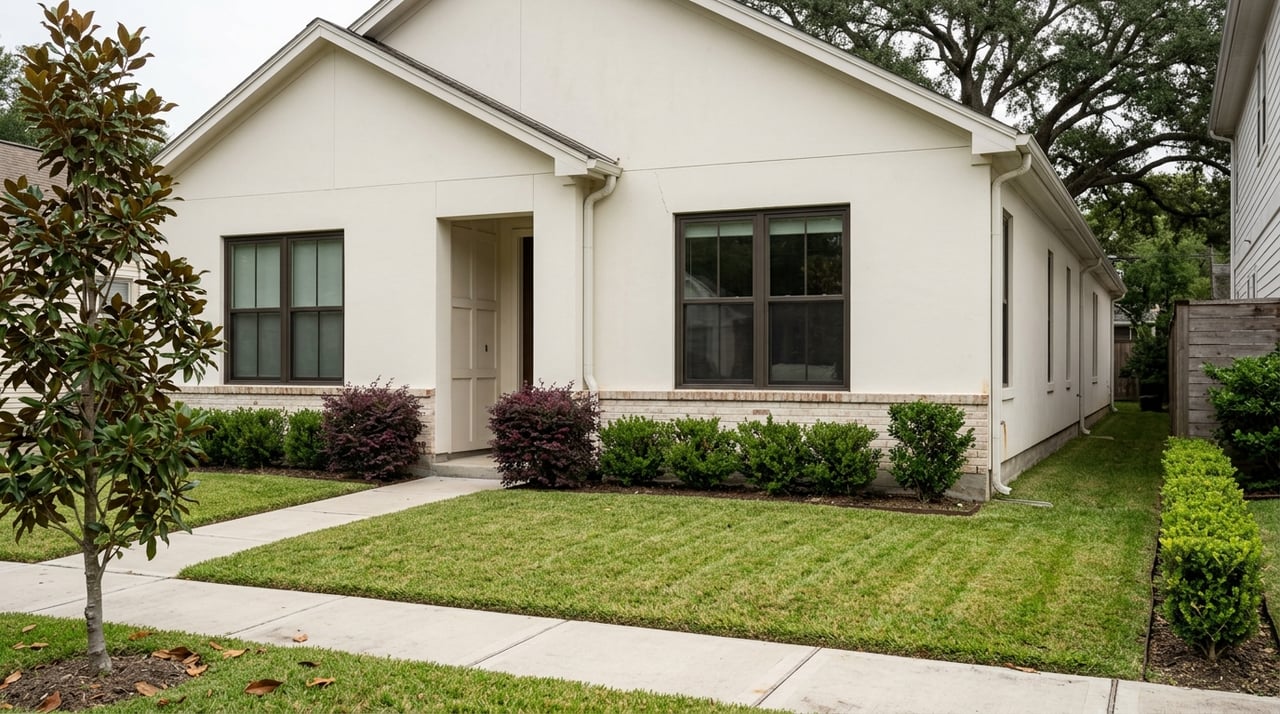
That plan is why a walk through Southampton, Boulevard Oaks, or Old Braeswood today feels different from a walk through most other Houston neighborhoods built in the same decade. There are fewer curb cuts interrupting the sidewalk. Cars parked on the street are the norm rather than the exception, because driveways were never meant to compete for street frontage. The front yard, not the garage door, is what a Southampton house presents to its street.
The mechanism is unglamorous but it is the whole story. Garages and service access sit on the alley side of nearly every lot in Southampton, which means deliveries, contractor trucks, trash collection, and the ordinary clutter of daily life stay behind the house rather than in front of it. That is not a modern HOA rule layered on top of an older neighborhood. It is the original 1920s infrastructure still carrying the load it was built for a century ago, still shaping something as mundane as which day you roll a bin to the curb and which day you leave it by the garage.
The tradeoff shows up in the small things that make daily errands easier than they'd otherwise be: guests can park in front of your house without blocking a driveway, and the block reads as continuous lawn rather than a row of garage doors. It is a convenience nobody in the neighborhood asked for recently, because nobody had to. It was decided in 1923 and has simply kept working.
The neighborhood's other visible marker, the stone and concrete pillars at street corners, has a much shorter and more deliberate history. In the fall of 2021, the Southampton Civic Club began a project to restore the pillars still standing from the original development and to add new ones at intersections where none had ever existed, including at Rice Boulevard and Bissonnet. The project ultimately touched 23 existing pillars, all repaired and cleaned by early spring 2022, and added 27 new ones at intersections that had gone unmarked for the better part of a century. Four additional pillars, engraved simply with the neighborhood's name, now stand at Southampton's boundary points.
None of it was paid for with city funds. The civic club set a fundraising goal of $40,000, met it in May 2022 through resident donations, and began casting and installing the new pillars that June. The Southampton Civic Club describes the effort as an attempt to restore a piece of Houston history, and the framing is accurate in a literal sense. The pillars are not decorative additions borrowed from another neighborhood's aesthetic. They are filling in gaps in a marking system that the original developer never fully completed, using resident money almost a century after the fact.
The civic club's Trees for Southampton committee has planted more than 1,300 street trees over the years, work that runs on the same logic as the pillar restoration: a volunteer group, funded by residents, maintaining a piece of the neighborhood's original character. The oak canopy that makes Southampton's boulevards recognizable from a single photograph did not arrive by accident, and it does not maintain itself. It is the product of the same club that reviews building plans, chases down deed restriction violations, and now oversees the corner pillars.
Southampton sits inside the University Place Super Neighborhood, a designation the city adopted in 2000 using University Place as its original model, and one that also encompasses Boulevard Oaks, Morningside Place, Old Braeswood, Southampton Extension, and Southgate. Each of those subdivisions has its own version of the same story: an early-1920s plan, a volunteer civic club formed to protect it, and a set of deed restrictions still enforced today that keep new construction inside the original lines on setbacks, height, and use. Southampton's civic club, formed in 1929, still reviews building plans free of charge for residents planning new construction or renovations, checking them against restrictions first written into the deeds back in 1922 and 1923.
None of this runs through Houston's building department. There is no city ordinance requiring a pillar at Rice and Bissonnet or a garage on the alley side of a lot. It runs entirely on the fact that a developer made a specific promise in 1923, a civic club formed six years later to keep that promise intact, and residents a century on are still writing checks to make sure the physical markers of that promise do not quietly disappear. That is the piece of University Place most people drive past without registering. The neighborhood's front-yard calm is not incidental to its layout. It is the layout, still working, funded and maintained by the people who live inside it.
If you are weighing a move within University Place, or trying to understand how a specific block's history might shape what you can build there, Loulou Estates Group can walk you through the deed restrictions, alley access, and civic club review process that come with any Southampton or Boulevard Oaks address. Schedule a consultation to talk through what a particular lot in University Place actually allows, and what a century of civic club decisions means for your plans.
This article is general information, not legal, tax or financial advice. Consult a qualified professional about your situation.
Stay up to date on the latest real estate trends.

My multicultural background allows me to cater to the varied needs of my local and international clients, ensuring that each transaction is a carefully crafted experience that respects and celebrates cultural diversity.
1800 St James Place Ste 302 Houston TX 77056